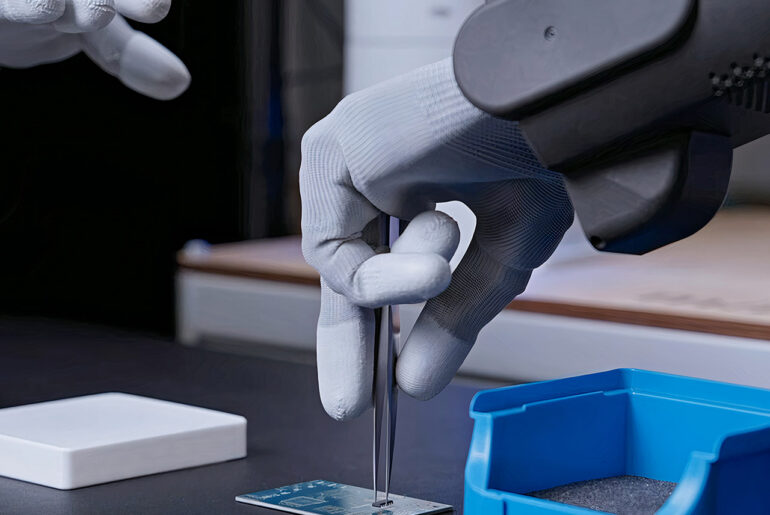
DJI chose the Cannes Film Festival stage to show off its latest pocket camera, the Osmo Pocket 4P, and the move makes perfect sense for a device aimed straight at filmmakers who want serious tools in a compact package. This model builds on the Pocket series tradition of three-axis stabilization in something small enough to slip into a jacket pocket, yet it steps up with two separate lenses working together.

Few pieces of technology capture attention quite like a device that launched an era. In September 2008 T-Mobile teamed up with Google to reveal the G1, a phone built from the ground up to run Android software. Available starting that October for customers on a two-year plan, it arrived at stores priced at $179 ($277 today) and immediately drew crowds eager to try something different.

LA Chargers fans who stayed up late on schedule night were in for a treat this year. The team effectively transformed the entire 2026 lineup into a Halo-inspired trip that would fit right in with the games themselves. Microsoft collaborated with the Chargers to make all of the details inside the Halo game engine look right at home, and let me tell you, the end result feels like stepping into a custom Halo campaign, where each opponent becomes its own battlefield map, full of sneaky references that will only be picked up by true NFL and Halo fans from the start.

Land Cruiser owners now have a companion who takes over when the four wheels cannot go any farther. Toyota debuted the Land Hopper, a three-wheeled electric personal mobility concept designed to navigate tight trails and mountain paths with two wheels and a third for stability. With the ability to shrink to the size of a thick book, it fits well into a Land Cruiser’s cargo space before popping out allowing you to explore the great outdoors, as well as places where your larger vehicle just cannot fit.

Les Cookson drew on memories of after-school arcade visits with friends when he set out to create something his family could enjoy together. He knew many homes lack room for a bulky machine that sits idle most of the time. So he designed Swap Arcade, a unit that starts as ordinary storage furniture and opens into a complete two-player arcade cabinet within seconds.

Users slip on the Garmin Instinct E, priced at $199.99 (was $300), and immediately notice its lightweight polymer case resting comfortably against the skin. No heavy metal edges or glossy finishes compete for attention. Instead the watch settles in like an old reliable tool built for actual use rather than display. Its monochrome screen stays readable under bright sun or in deep shade without draining power. Buttons feel deliberate and few in number, keeping every interaction straightforward during a hike or while checking the time at work.

Photo credit: Amaan Mukadam
Crowded streets across Europe pack in far more people than parking spots can handle. Freelance designer Amaan Mukadam from the UK looked at that daily scramble and built the MicroFold, a four-wheeled electric vehicle meant for exactly one rider at a time.

BBC’s Maya Even greeted viewers on a February evening in 2000 with a simple question about the future. She introduced a report from The Money Programme that examined how phone companies and tech giants poured billions into linking mobile devices to the internet. Nils Blythe took the story from there, traveling first to Tokyo where the shift already showed real momentum.

Photo credit: Everton Favretto/Tecnoblog
Leaked images from a Brazilian certification lab capture Microsoft readying a gamepad built from the ground up for streaming. Compact and straightforward, the device shrinks the familiar Xbox layout into something pocket friendly while keeping every essential control intact. White and black versions appear in the shots, both sporting a clean rectangular body with short grips that suggest easy one handed carry for travel or couch sessions alike.

Modern tests have brought new life to a weapon long forgotten from one of history’s famous ships. Crews aboard the Mary Rose carried dozens of giant fire darts among their armaments back in 1545. No one knew exactly how these massive incendiary projectiles worked until a team decided to recreate them and run real world trials. The results show why sailors once dreaded weapons like these on wooden ships packed with gunpowder and canvas.