ByteDance managed to launch Seedance 2.0 without much hoopla, and the early reaction is that this AI video tool has the potential to revolutionize the way people create moving images for the better. Over the weekend, the company stealthily released a beta version for customers of its specialized video platform Jimeng AI, although access remains limited.

The Ferrari Luce interior is a silent revolution in a world of flashy screens that appear to be taking over everything. Jony Ive and his LoveFrom team spent nearly 5 years working behind the scenes with Ferrari’s designers to develop a cabin that refuses to allow all of that digital clutter get in the way. They’ve focused heavily on physical controls, and it shows, with machined aluminum switches, toggles, and knobs that provide actual feedback when touched. The Ferrari team tested these features repeatedly, for a total of 20+ rounds, to ensure that every click and turn felt pleasant.

Danny Spencer took his trusty old Game Boy Color and turned it into a canvas for real-time 3D shading, transforming the simple handheld into a shockingly convincing three dimensional environment. As the teapot spins, its curves capture the light from a source you control with the D-pad, causing shadows to alter seamlessly in response to each nudge.

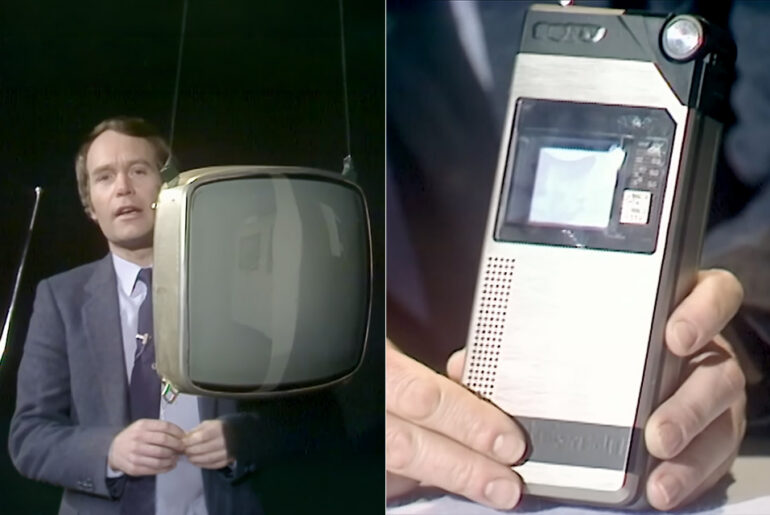
The Kodak MC3 debuted in 2001 as a compact little box that couldn’t pick which hat to wear. Kodak advertised it as the MC3 Portable Multimedia Device, which accurately characterized the device’s lofty but rather erratic purpose. This tiny box contained digital photos, short video clips, and MP3 tracks, all in one neat little package, years before only the most daring gadget users would even consider merging those functions.

AYANEO’s NEXT 2 is a mobile gaming powerhouse that’s about the size of an ultraslim laptop that has been slightly shrunk down. This Windows-powered machine features AMD’s newest Strix Halo processor, a significant piece of hardware, as well as an eye-catching 9.06-inch OLED screen and a price tag to match its ambitions. Those early bird bookings start at $1,799, but the top build goes all the way up to $3,499 during crowdfunding, then to a staggering $4,299 when it hits the regular retail circuit.

The Mophie 3-in-1 Travel Charger with MagSafe, priced at $40 (was $150), sits quietly on your nightstand, desk, or kitchen counter, charging three devices simultaneously without taking up too much space. People who use this charger frequently reach for it, even when they are not on a trip. A few days in, it’s easy to see why: it just makes sense to have one compact accessory that can handle all of your gadgets rather than a mess of cables and individual pads scattered about.

The final trailer for Project Hail Mary lands just before the big game, Super Bowl LX, and it hits the ground running, literally. Ryan Gosling plays Ryland Grace, a former middle school science teacher who awakens on a spaceship alone and with amnesia. The stakes are evident from the start: Earth is on the verge of annihilation due to a dimming sun, and this long-shot mission is the last chance to reverse the damage.

Auto enthusiast Nathan Paykin purchased a 2006 Suzuki Swift for the bargain price of AU$500 (approximately US$350) and converted it into a full-size replica of the vintage Little Tikes Cozy Coupe toy vehicle that many children most likely played with. This classic red-and-yellow Cozy Coupe now appears as a real-life car that adults can drive, complete with flames.
![]()
Photo credit: Jose-Luis Olivares, MIT
MIT engineers have come up with some ingenious work: they’ve created tiny silicon structures that can crunch numbers using heat that would otherwise be wasted rather than energy. It’s a game changer for dealing with heat in electronics, and a team of MIT researchers lead by undergraduate physics wiz Caio Silva has proved that it truly works. In a study published in Physical Review Applied, they show off the results of their simulation work, demonstrating that these small devices can do some rather important math operations with surprising accuracy.

Boston Dynamics is finishing up a long chapter in the Atlas robot’s existence before shifting its focus to the electric production model that will be used on the factory floor. The company collaborated with the Robotics & AI Institute to push this robot’s full-body movement and control capabilities one last time.